Category: Diary

  • Black and Decker Workmate Restoration Part 2 – It’s Home

    The workmate is home and in my garage. 

    Despite it’s well used appearance it is in great condition, I have only noticed a couple of broken bits so far; one of the frame locks that holds the bench in the folded (closed) position is missing, and the adjustable feet have seen better days, some of the plastic feet are heavily worn. 

    I think I’ll also be replacing the wooden top of the bench as that looks a bit past it now.


    The base and the wooden top supports (all the blue parts) are made from steel and the silver looking parts are made from cast aluminium. 

    All of the components seem to be in really good condition, no bent or damaged parts which I am really pleased about, just a bit of surface rust that will need a bit of wire brushing to get rid of.

    Unlike the later models, this one has machine screws and starlock washers rather than being permanently riveted together. This means I can disassemble the components completely in order to clean and repaint them, making the restoration so much easier.

    Next step is the strip down where I will break the bench down into its separate components ready for cleaning and painting.

  • Black and Decker Workmate Restoration Part 1 – The Purchase

    So I need a new project and I have decided to make that project a restoration of a vintage Black and Decker Workmate project which I will then put to work once complete, this won’t be a garage queen, it will get used for it’s intended purpose! 


    I remember my dad having a workmate when I was younger but he had the black one and I remember that bench breaking easily. These older ones are a little more robust which is why I decided to start my search for one. 

    I sourced a vintage workmate from eBay in need of some care, and a quick bid and £42 later I was the new owner of a very old and tired looking Black & Decker Workmate. 

    It was advertised in Harwich so I dispatched my dad to go and get it as he lives up that way and it would give me a good reason to drive down there and see him for the first time in about two years.

    These are the seller’s pictures which give a good indication about the condition of the bench and the job I have in front of me. It looks like it’s done plenty of work over it’s life and I think with some care it can go on working for decades to come.

    General consensus is that these old benches are the best ones they ever made. Much better build quality than the later ones, which my dad had and I remember from my childhood.

    He had a black one, a workmate 2 or similar and I remember the adjustment handles had broken off and the leg stays were plastic which had also broken, No such issues with this old girl.

    Keep an eye out for my progress after I pick it up. I’ll be disassembling it next.


    Black and Decker WM625
  • The Garage

    This is the bit I have been looking forward to the least.

    The garage is full of stuff so I could not afford for it to be exposed to the weather for any time at all.

    The drawings utilise the existing garage wall as the lower part of the inner leaf and a steel beam to be installed to for the support for the outer leaf.

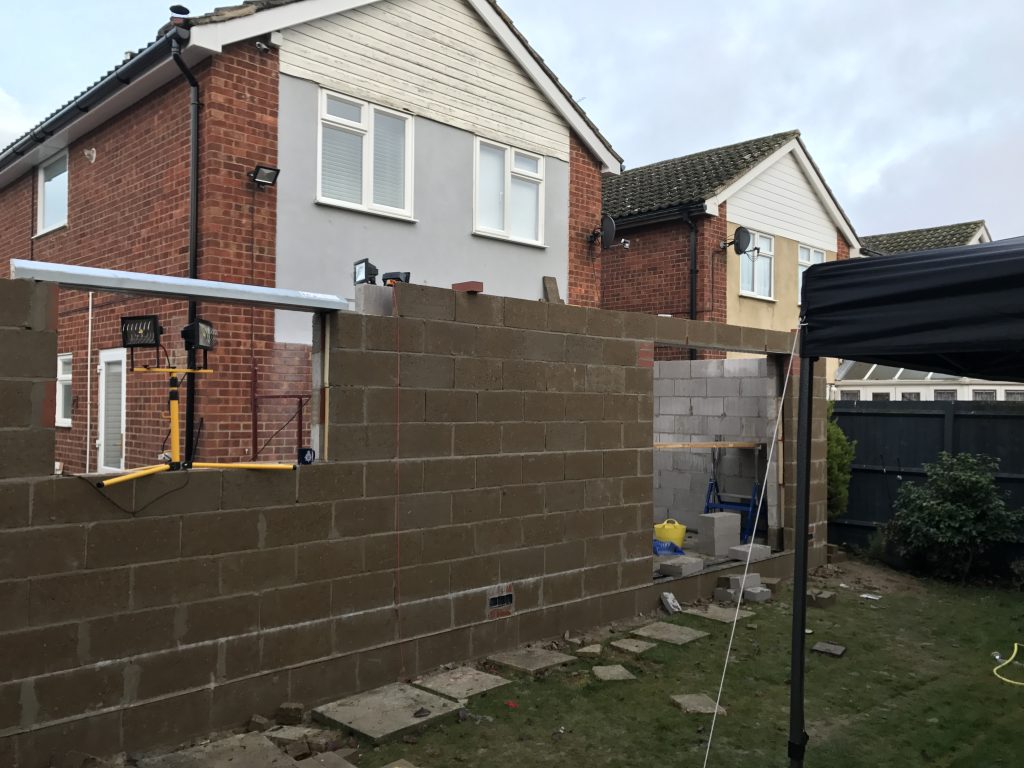
    In order for me to continue building the blockwork upwards I needed to take off a part of the garage roof to expose the brickwork.

    This sounds easy but the garage is a flat GRP roof that slopes backwards towards where I am working, this means that any rain that falls is going to run down towards the open roof and into the garage so I better work quickly and pick my day.

    First I removed the door & frame in order to make the door central and create a support pier

    New blockwork completed and door reinstalled

    In goes the lintel and the roof is off and the interior exposed to the elements, worse still is the roof slopes back towards the opening

    Here you see the padstone in place for the steel to support the outer leaf

    What I have done to stop water running into the garage is buy some torch-on felt and apply it to the GRP roof and create a dam. So far it seems to work pretty well although using a plumbing blowtorch to heat up felt is pretty tough as the flame is just far too small.

  • First Two Steels In!

    Now that my padstones are in and set, I have taken the plunge and got my steel beams in.

    There are two beams, bolted together with spacer tubes between them in order to give rigidity and the correct spacing.

    This cavity wall matches the existing building rather than the standard 100mm gap as it will need to extend onto the existing structure when the roof goes on, to create a gable end due to the uneven spacing of the trusses. More will become clear on this later.

    I managed to get both of these beams in without assistance, which is handy as I didn’t have anyone around to help.

  • Padstone Two

    I bought a Bosch laser leveller and I’m so glad I did. It’s been so bloody handy!

    I got the laser out and got a level from Padstone One on the new wall across to the existing building and marked up where Padstone Two has to be height wise.

    Then I broke out the Bosch SDS drill and used my new Armeg mortar chisel to carefully remove a few bricks and dry fitted the padstone. It went in perfectly.

    Knocked up some strong mortar with sharp sand (for extra resilience) and bedded Padstone Two in place. Checked the level and it’s spot on, not a bad 45 minutes work.

    Now that’s done, time to go inside for tea & medals.

  • Getting Cold Outside Now & More Blocks Delivered

    It’s getting really cold outside now, and I’m having to add frostproofer to the mortar. It’s becoming a real task to get motivated to go outside and get on with this!

    Second time lucky for Ridgeons as they brought the wrong blocks initially as I arrange for staged deliveries.

    I substituted the 7n dense concrete blocks I had originally ordered for 3.2n celcon standard blocks and they forgot to change the order. The driver had to go away and come back with the right ones. We got there eventually.

    I literally could not have continued to build with 7n blocks as they’re just so heavy. The lower half of this building is so solid it’s like a bomb shelter.

  • Vaulted Roof Underway

    Now that the rear of the extension is up to the wallplate height, I have started to frame the vaulted roof using 47×175 graded timber that I bought from A10 Timber

    My reasoning behind this early start on the roof is to get a dry area to store some materials. In hindsight I would build the wall up at the gable end first in future.

    There are two large rooflights to go into this roof to allow light into the interior of the ground floor, these are framed with double joists either side and double trimmers between, all bolted together with coach bolts and timber connectors.

  • First Lintels In

    So I’m up to the lintel height at the back of the building now and I have fitted the first two lintels. One over the patio doors and one over the kitchen window.

    They’re not as easy to fit as I thought, keeping the blocks level on the lintel is actually pretty tricky as they seem to have a tendency to tilt outwards, I took it slow and steady and used support to hold the blocks plumb.

    I know I wanted the building to be solid but I’m not sure if I made the right block choice with these 7n dense concrete ones, they are a killer to lift and lay!

  • Tree Butchery Courtesy of my Neighbour.

    So, it’s no secret that my neighbour has not taken the fact we’re having an extension very well. After giving me some planning advice to suit himself which I rejected as it would not work for us.

    He’s turned from being an alright bloke that I used to get on with, into a bit of a tosser.

    I wont go into the issues here save one.

    I went away for the weekend for my good mate Dan Bunce’s stag do in Brighton, and Carley went off to her mum’s for the duration with Daisy.

    For one reason or another Ashley and I came home early on the Saturday afternoon, and whilst we were travelling up the M23 I get a text from my belligerent neighbour telling me he’s knocked my ladders over (they were resting against my fence) whilst carrying through some “clippings”.

    I wasn’t sure what clipping he’d been doing as he doesn’t actually have any trees in his garden but I left it at that for now to see for myself when I get home.

    We get back to mine and after a cuppa I decide to go out and sort the fallen ladders out and make sure they haven’t smashed anything on the way down, which luckily enough they hadn’t.

    When I tun around to go back into my house, I notice THIS:

    I mean come on, really?! What a hatchet job.

    Obviously the chainsaw mad gardener next door thought that this was the best course of action to take, perhaps in protest of my extension?! Who knows.

    Now bear in mind my neighbour is a landscape gardener by trade, I would have thought that he might have done a better job than this.

    After the initial shock had subsided, upon reflection, I don’t actually give a shit about this. The tree will still look just as nice from my side, it’s his view that is going to look bloody awful. Why?! 

  • Walls taking shape

    Walls taking shape

    Now that the slab is done, I have started to make some progress in getting the block work done. It’s not as quick as an experienced builder would be doing it, but I am saving a hell of a lot of money by doing this in my spare time.

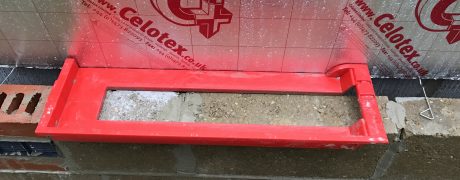
    I’ve been using a bricky to get my mortar level and so far it has been a godsend. It allows the joints to be nice and even. The only issue is that it becomes really difficult to take out any unevenness between the blocks with a thin bed.

    Another issue I have noticed is that the bricky is tight against the insulation and this makes it difficult to move.